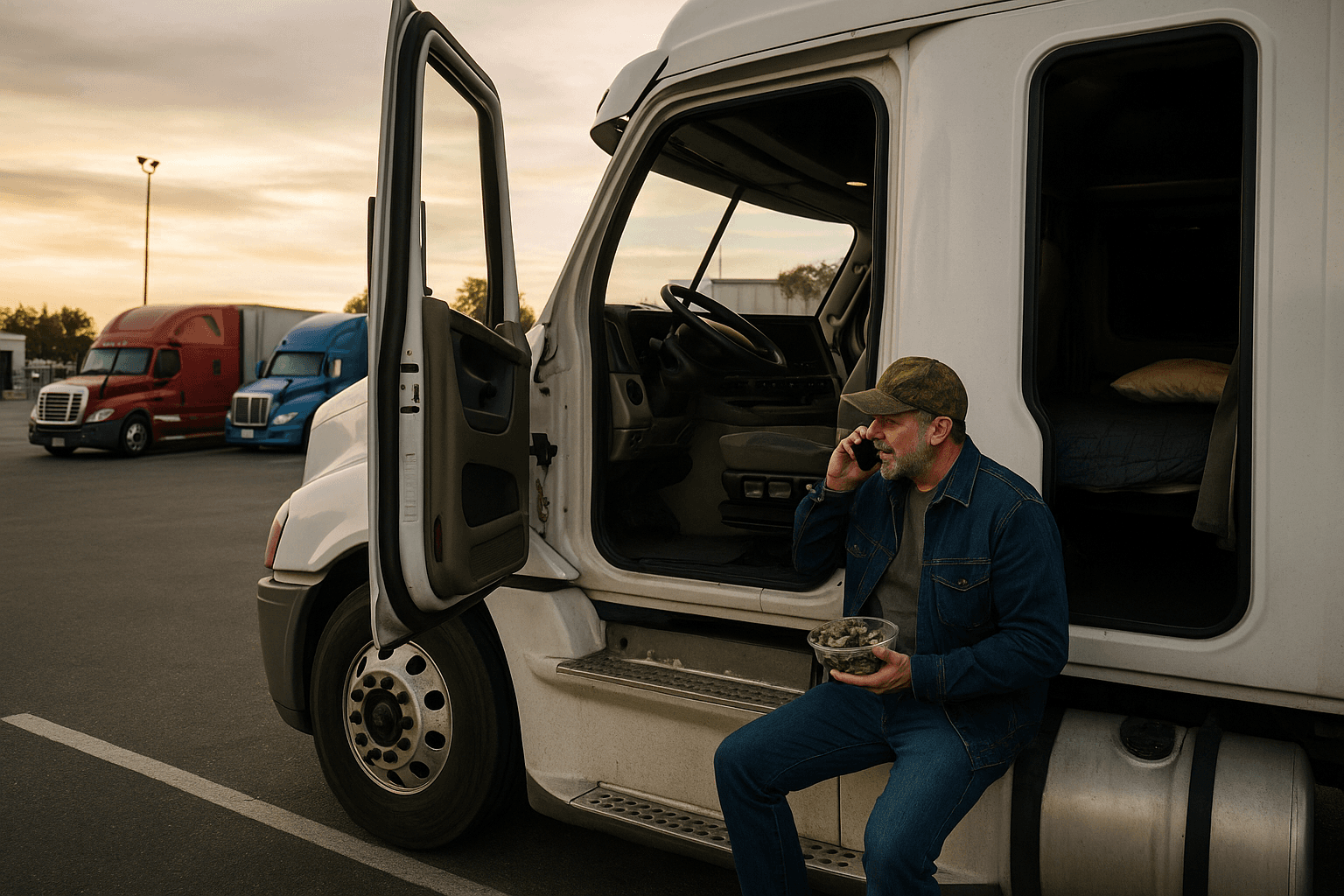
Managing Home Time and Relationships From the Road as a CDL-A Driver
The hardest part of trucking for most drivers is not the hours, the traffic, or the weather. It is being gone. And no amount of good pay makes that easy on the people waiting at home.
This is not a pep talk. It is a practical look at what actually works — and what does not — for Sacramento-area CDL-A drivers trying to keep their personal lives intact while running freight.
Why Home Time Is More Complicated Than Your Offer Letter Says
Every job offer comes with a home-time description. "Home weekly." "Home weekends." "Regional — home most nights."
Those phrases describe averages, not guarantees. A detention delay, a breakdown, a rerouted load — any of it can push a "home Friday night" into "home Sunday afternoon." Once or twice, it is life. Every week, it becomes a pattern that damages trust.
The first move a driver can make — before accepting any job — is asking the recruiter a more specific question: What percentage of drivers on this account actually hit the stated home time over the last 90 days? If the recruiter cannot answer that or will not, the number on the offer letter is marketing, not a commitment.
What "Quality" Home Time Actually Means
A driver can be physically home and still be absent. If you walk through the door after eight days out and spend the first eighteen hours asleep, then the next day irritable and catching up on chores, and leave again before anyone has actually talked — you were home, technically.
Quality home time is intentional. It means deciding in advance, while you are still on the road, what you are going to do with the time. Not the whole list of things that need to get done. One or two things that matter to the people in your house.
That sounds small. It is not. Drivers who report the healthiest home relationships almost universally say some version of the same thing: they stopped treating home time as recovery time for themselves and started treating it as relational time for the people they had been away from.
The recovery still has to happen. But napping when kids are at school and partners are at work — instead of being checked out when everyone is finally in the same room — changes what home time feels like for the people who stayed.
Communication on the Road: What Works, What Backfires
Over-communication and under-communication both cause problems. Here is the pattern that tends to backfire: a driver calls or texts constantly when bored or lonely on the road, then goes quiet for long stretches when tired or stressed. From the other side of that, it looks like availability based on the driver's needs, not shared connection.
A lighter, more consistent rhythm usually holds better. One real conversation per day — not a quick check-in, an actual conversation — holds more relational weight than twelve sporadic texts. It does not have to be long. Ten or fifteen minutes where both people are actually present beats an hour of half-attention.
Video calls matter more than most drivers expect. Especially with kids. A voice on the phone is a voice. A face on a screen is a person. The distance feels smaller.
Some couples use a shared photo — a driver sends one picture per day of something from the road, a partner sends one from home. It keeps people in each other's days without requiring both to be available at the same moment.
Sacramento-Specific Considerations for Home Time Runs
Sacramento sits in a practical spot for regional and dedicated freight. I-80, I-5, and Highway 99 all converge here, and there is consistent freight running to the Bay Area, the Central Valley, and the Pacific Northwest.
For a CDL-A driver based in or near Sacramento, regional and dedicated positions on these corridors can genuinely support more predictable home time than OTR national work — not every week, but structurally. The shorter the lanes, the more times per week a driver can realistically cycle back.
Drivers looking to trade some pay for more time home should be asking carriers specifically about dedicated accounts serving the Northern California region. Dedicated does not always mean less money, either — it depends heavily on the account and the carrier.

Having the Real Conversation With Your Partner
Most relationship strain in trucking does not come from the absence itself. It comes from mismatched expectations about what the absence means and how long it is supposed to last.
A partner who signed on for "regional, home every weekend" and ends up living the reality of OTR is not being unreasonable when they are frustrated. That is a bait-and-switch they did not agree to.
That conversation — what are we actually doing here, and for how long — is one most trucking couples avoid. They should not. Specificity helps. "I want to run OTR for two years, stack the savings, then move to a local position" is a plan two people can evaluate together. "I have to run whatever the carrier needs" is an indefinite sentence.
Drivers who include their partners in the job-search and career-decision process — not just informing them after the fact — report fewer conflicts about work. That is not surprising. People handle hard situations better when they feel like participants, not passengers.
When the Relationship Is Already Strained
If the distance has already done damage, that is real and it matters. A few practical suggestions:
Do not try to fix it during a 45-minute call. These conversations need time and physical presence. If there is serious work to do, it probably needs to happen at home, ideally with help from someone who knows how to facilitate it.
Do not use home time to fight about road time. The conversation about whether this job still makes sense for this family is worth having — but not when someone just walked through the door after ten days away.
And if a driver is running themselves into the ground financially or career-wise trying to get home more often, that pressure usually makes the relationship worse, not better. The better path is finding a job that structurally supports home time, rather than heroically overriding a job that does not.
FAQ
What home time is realistic for a CDL-A driver based in Sacramento? For regional or dedicated runs in Northern California, many drivers see home time two to three times per week or on weekends. OTR drivers often average home every two to three weeks. The specific account and carrier matter more than the job title — always ask for actual home time data, not marketing language.
How do truck drivers maintain relationships while on the road? Consistency helps more than volume. One real conversation per day, video calls instead of audio-only when possible, and small shared habits — like sending a photo from the road — keep both people present in each other's days without requiring simultaneous availability.
Is trucking hard on marriages? It can be, but the research and driver experience suggest the biggest factor is not absence itself — it is whether expectations were set honestly and whether both partners feel included in the decision. Drivers who communicate clearly about career plans and home-time realities tend to report stronger relationships.
Should I tell my partner about my job search before or after I accept an offer? Before, if home time matters to the household. A job that changes your schedule is a household decision, not just a career decision. Partners who are included in the search and evaluation process tend to adjust better when things are not perfect.
Can I find a Sacramento-area trucking job with better home time without taking a big pay cut? Sometimes. Dedicated and regional accounts serving Northern California corridors can offer more predictable home time than OTR, and dedicated pay is sometimes competitive with OTR because carriers value consistency. It depends on the account. Compare total compensation, not just base pay, and ask specifically about the home-time track record for drivers on that account.
What should I do if trucking is damaging my relationship? Start by identifying whether the issue is the job specifically (wrong carrier, wrong run, broken promises on home time) or the career generally (the distance itself). If it is the job, a better-matched position may help significantly. If it is the career, that is a larger conversation worth having with your partner, and possibly with a counselor who has experience with shift-work or travel-heavy careers.